














The Kill-Switch Audit
In the architecture of digital sovereignty, a “Pipe” is only as effective as its seal. For the digital minimalist, a kill-switch is not a luxury or an optional “feature” provided by a VPN client; it is a mechanical necessity. The…

DNS: The Silent Tracker and Your Final Line of Defense
Every time you type a website name into your browser, your device sends a request to a Domain Name System (DNS) server to translate that name into an IP address. Think of DNS as the “phonebook” of the internet. By default, this phonebook is…
Containerization: Isolating Cross-Site Identity Leaks
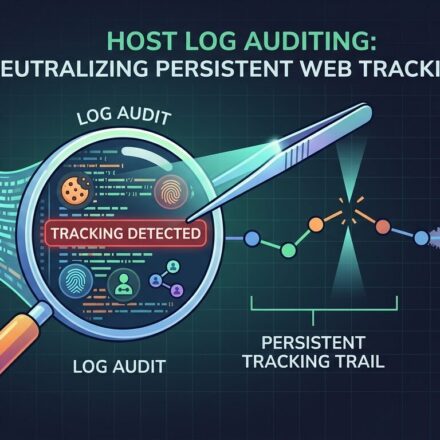
When you log into a web service, that platform drops tracking cookies designed to monitor your activity across the rest of the web. Even if you browse away from the site, these persistent state markers signal your identity back to centralized servers.…
Encrypted DNS: DNS over HTTPS (DoH) vs. DNS over TLS (DoT)
The “Pipes” of the internet are only as private as the requests that navigate them. In a standard network environment, every time you visit a domain, your system sends a plaintext query to a DNS server. This allows your ISP or any actor on…
Extension Minimalism: Stripping Content Blockers to the Bare Essentials
A common pitfall in browser security is “extension bloat.” Installing dozens of privacy add-ons actually expands your attack surface and creates a highly unique browser fingerprint, allowing data brokers to track you based on your specific…
The Librewolf Architecture: Zero-Telemetry by Default
For users who prefer an operating environment free of manual configuration overhead, fork distributions provide an alternative path to privacy. Librewolf is an independent, community-driven custom build of Firefox designed specifically to eliminate…
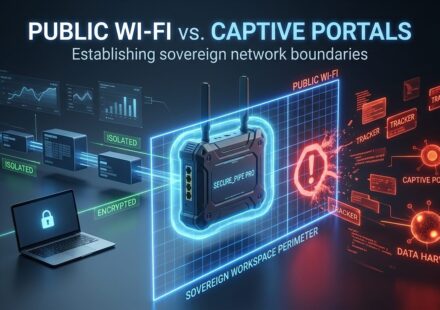
Public Wi-Fi vs. Captive Portals
In the pursuit of digital minimalism and network sovereignty, one of the most significant points of vulnerability occurs during the initial “handshake” with public infrastructure. Whether at a transit hub or a local cafe, captive portals act…

Firefox about:config Audit: How to Strip Telemetry and Browser Bloat
The web browser is the most volatile component of any local infrastructure. By default, even open-source browsers like Firefox ship with telemetry, pre-fetching algorithms, and connection settings optimized for corporate convenience rather than user…
Hardening WireGuard for 2026
In 2026, the landscape of network privacy has shifted away from bloated, “all-in-one” corporate solutions toward lean, auditable infrastructure. For the digital minimalist, the debate between legacy protocols like OpenVPN and modern standards…
Local-First SSH Key Management: Beyond Passwords
In the hierarchy of server security, password-based authentication is a legacy vulnerability that has no place in a minimalist tech stack. Passwords are susceptible to brute-force attacks and credential stuffing. To achieve true sovereignty over your…